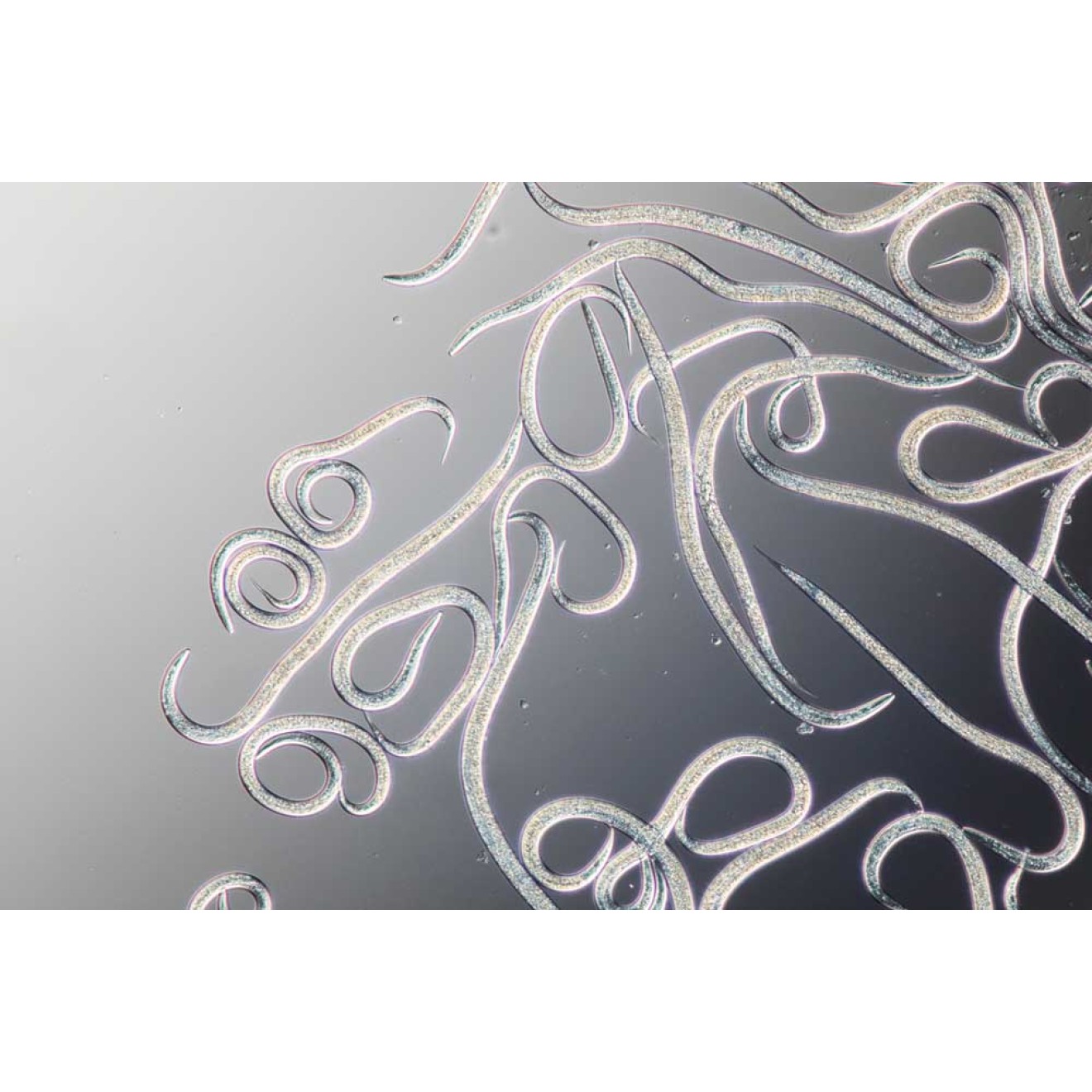
biohelp – Nematodes (Larva-Stop – 4298-0)
Nemahelp – Steinernema feltiae
Beneficial organism Live product Cool shipping
Use & Target Pests
For fungus gnats (Bradysia spp.) and western flower thrips (Frankliniella occidentalis) in ornamental, vegetable and fruit production – outdoors, indoors and under glass. All crops (after indication extension) see the indication table in the instructions for use.
Properties & Mode of Action
Steinernema feltiae (entomopathogenic nematodes) are approx. 0.8 mm in length. They enter fungus gnat or thrips larvae via natural openings and release symbiotic bacteria from their gut. The pests die; inside the larva the nematodes reproduce and spread to further larvae.
Product options (area coverage)
- 10 m² – approx. 5 million nematodes (guideline)
- 20 m² – approx. 10 million nematodes (guideline)
- 100 m² – approx. 50 million nematodes (guideline)
- 500 m² – approx. 250 million nematodes (guideline)
Choose according to treated area. Guidelines are based on an application rate of 500,000 nematodes/m² (see below).
Application
Curative treatment via drench or spray application.
- Rate: 500,000 nematodes/m² (mushrooms 1 million/m²). One 50 million pack treats 100 m² (mushrooms: 50 m²).
- Soil temperature: effective between 14–33 °C (at least 8 °C for several hours/day).
- Soil moisture: Pre-moisten substrate and keep evenly moist for approx. 14 days after application.
- UV protection: Avoid direct sun during and for at least 2 hours after application.
- Mulch: Remove existing mulch material beforehand.
Directions for use
- Dissolve the pouch contents in 10 L of water (15–20 °C), rinse the pouch and stir well.
- Prepare working solution: mix 1 L concentrate with 9 L water per watering can; repeat as needed.
- Apply evenly according to the rate (rule of thumb: 1 L/m²; mushrooms 2 L/m²).
- Water in thoroughly to move nematodes into the root zone.
- Repeat after 2 weeks if necessary.
Notes & Storage
- Storage: 2–6 °C, dark, until expiry date; protect from UV light.
Technical data
| Nematode species |
Steinernema feltiae |
| Active substance (PPP) |
Beneficial organism |
| Application type |
curative (when infested) |
| Application period |
spring, summer, autumn; year-round (indoor) |
| Infestation level |
low, medium, high |
| Target pests |
Thrips, fungus gnat |
| Application area |
outdoor, indoor, under glass/greenhouse |
| Crop range |
fruit & vegetables, ornamentals |
| Application method |
drench / spray |
| Temperature range |
min. 8 °C; effective 14–33 °C (practice data); indicative max. 28 °C per specification |
Plant protection registration number (AT)
- BAES registration number:
- 4298-0 (short: 4298)
- Product name:
- Nemahelp – Steinernema feltiae
Combinations
- Yellow sticky traps for monitoring.
- Macromite/Hypoaspis predatory mites as an additional measure against fungus gnats/thrips.
Documents
Safety & legal
Use plant protection products with care. Always read the label and product information before use. Observe all warnings and symbols in the instructions for use.
Responsible person for plant protection products (AT)
Mr Pan Rotheneder · Tel.: +43 2249 30531
10 tips for correct use in home & small gardens
- Seek advice from trained personnel.
- Read and follow the full directions for use.
- Observe personal protective measures.
- Do not eat, drink or smoke during application.
- Dose correctly; avoid leftovers / dispose of properly.
- Choose the right timing (weather, growth stage, bee activity).
- Keep distances from water bodies; apply only in calm conditions.
- Clean equipment; handle rinse water correctly; dispose of old stocks.
- Wash skin; change and wash contaminated clothing.
- Store properly (original container, child-safe, protect from weather).
Keywords
Larva-Stop, Steinernema feltiae, nematodes, fungus gnat control, thrips control, drench application, yellow sticky traps, indoor, greenhouse
Notes on suitability for specific situations (crop, climate, treatment history) do not replace individual advice.